
How to choose cutting software for a small shop
Look at inquiry-to-delivery workflow, not just nesting percentage.

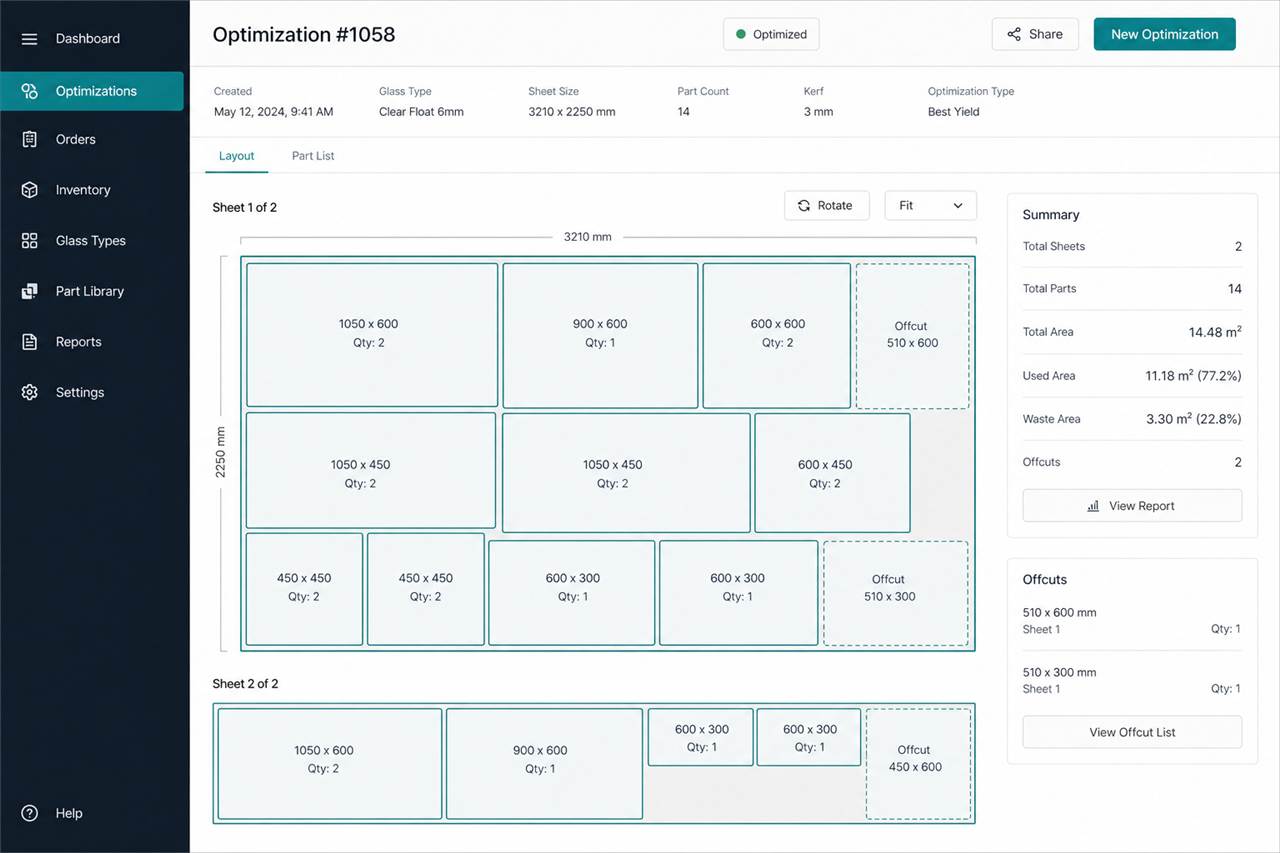
Choosing "cutting software" often starts with comparing nesting pictures. For a small shop that is a trap. You buy a great optimizer and keep quoting in Excel, stock in your head, shop in WhatsApp. Six months later you say "digitalization did not work."
Material first, vendor second
Glass, MDF, stone, plastic, and metal have different rotation, service, and stock rules. Universal CAM does not replace CRM. Universal CRM does not know kerf. One company in List Master — one material group: a constraint that keeps catalogs clean.
Questions to ask on demo
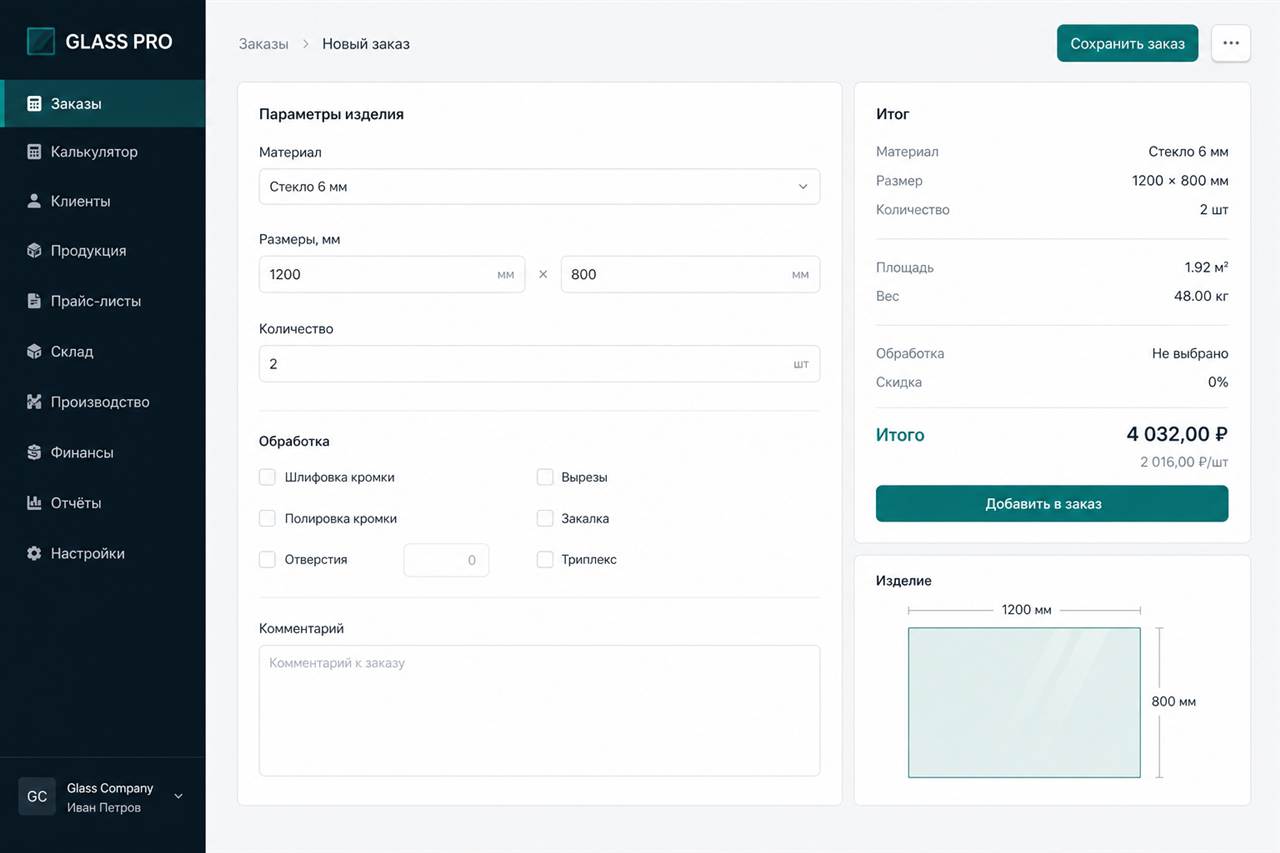
Where do price list and services live? Does the map land in the same order as the invoice? What happens to offcuts after approval? Can you issue an order if shop and PWA are off? How does the client learn status? Is there a site widget? Who pays for messengers?
If answers are "that is in another program," you are buying a piece of the workflow.
Do not confuse trial and rollout
14-day trial is to quote your typical order, not to "train the whole factory." Take five real specs. If calculator and cutting lie on them — stop. If it only lies because "we did not enter the price list" — that is your weekend work, not a bug.
Money and documents
Plan should not change until the invoice is paid. Refund of unused period and account access delivery should be written in plain language, not "zero liability." List Master bundles inquiry, quote, cutting, stock, and shop in one SaaS — trial without a card. Compare that to four software boxes you never integrated.