
How to optimize glass cutting
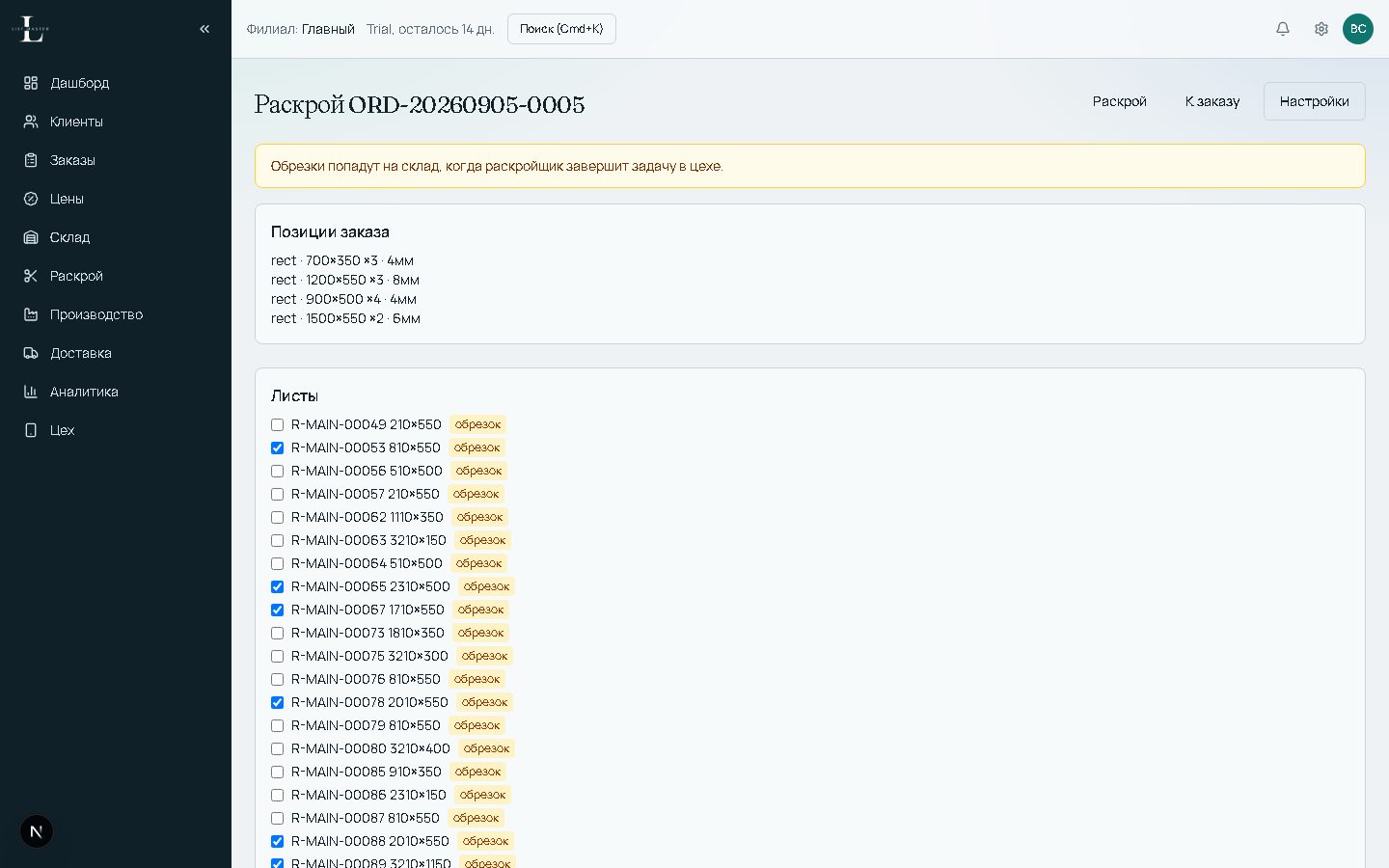
First the map and kerf, then usable offcuts, then a new sheet.
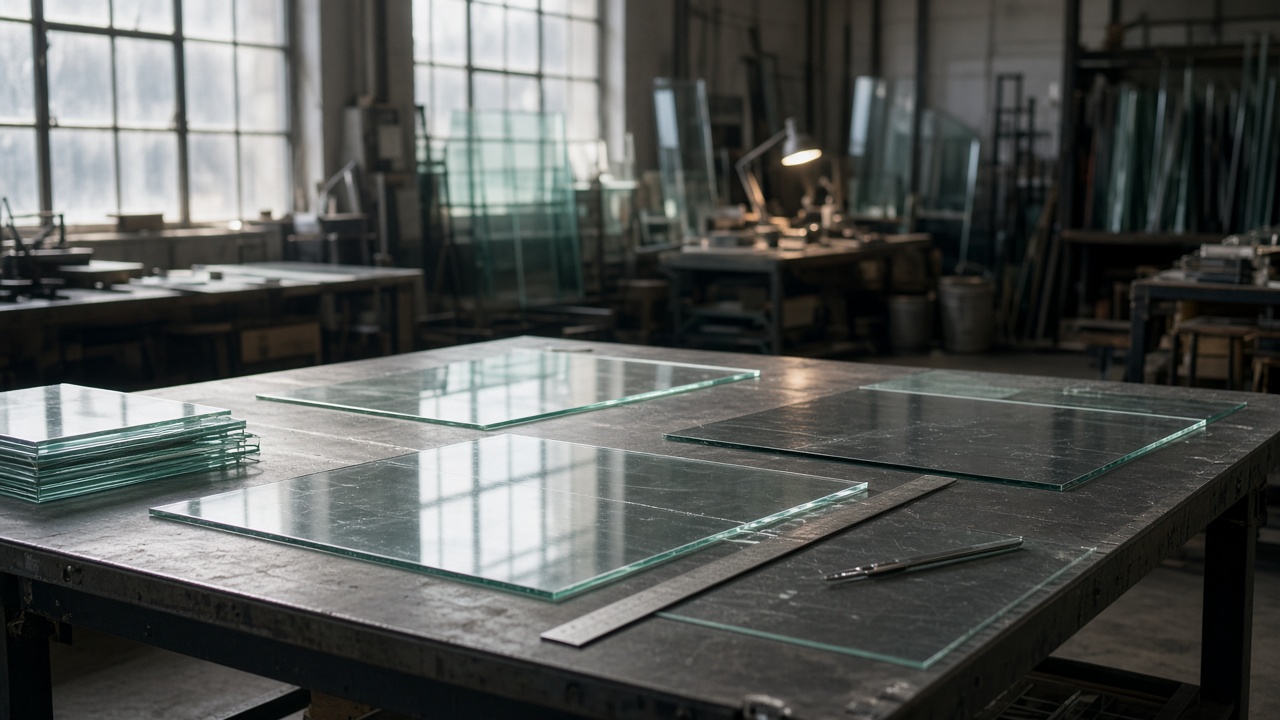
Glass cutting optimization is not about "packing rectangles tighter." Glass breaks, has edges, bevels, and a mirror side. An algorithm that rotates parts like MDF will cause chips and complaints even if utilization percentage rises.
Lock rules before the map
Before cutting, record kerf, minimum edge allowance, whether the mirror can rotate, and which offcuts count as usable. If rules live in the master's head, two shifts will produce two different maps for the same order.
Practical minimum:
- glass thickness and type (raw, tempered, laminated, mirror);
- cut width and edge allowance;
- rotation ban when there is pattern or silvering;
- minimum side and area for an offcut worth keeping in stock.
Large parts first
Place sashes, countertops, and cabinet doors first. Small inserts fill gaps. Reversing the order creates narrow strips unusable even for bevel strips.
On expensive clear glass and laminated glass, a mistake costs a new sheet, not "another MDF panel." The map must show utilization before the machine starts.
Offcuts are candidates, not trash
Optimization without an offcut warehouse always calls for a new sheet. Even perfect nesting does not know yesterday's 900×400 piece is already on the wall. The "map → stock reserve" link matters more than another percent on a fresh sheet.
Before cutting, check:
- is there an offcut of the same type and thickness;
- does the largest part fit;
- is the piece reserved for another order.
What to read on the map, not by eye
A good glass map answers four questions: how many sheets, what waste, which offcuts return to stock, where chipping risk sits on a narrow bridge. If the software only shows "pretty rectangles," it is a drawing, not optimization.
List Master calculates cutting in the same order as bevel and tempering and suggests stock remnants. Try the cutting demo and save the map to the order — then the shop cuts to an approved plan, not habit.