
How to reduce glass waste in production
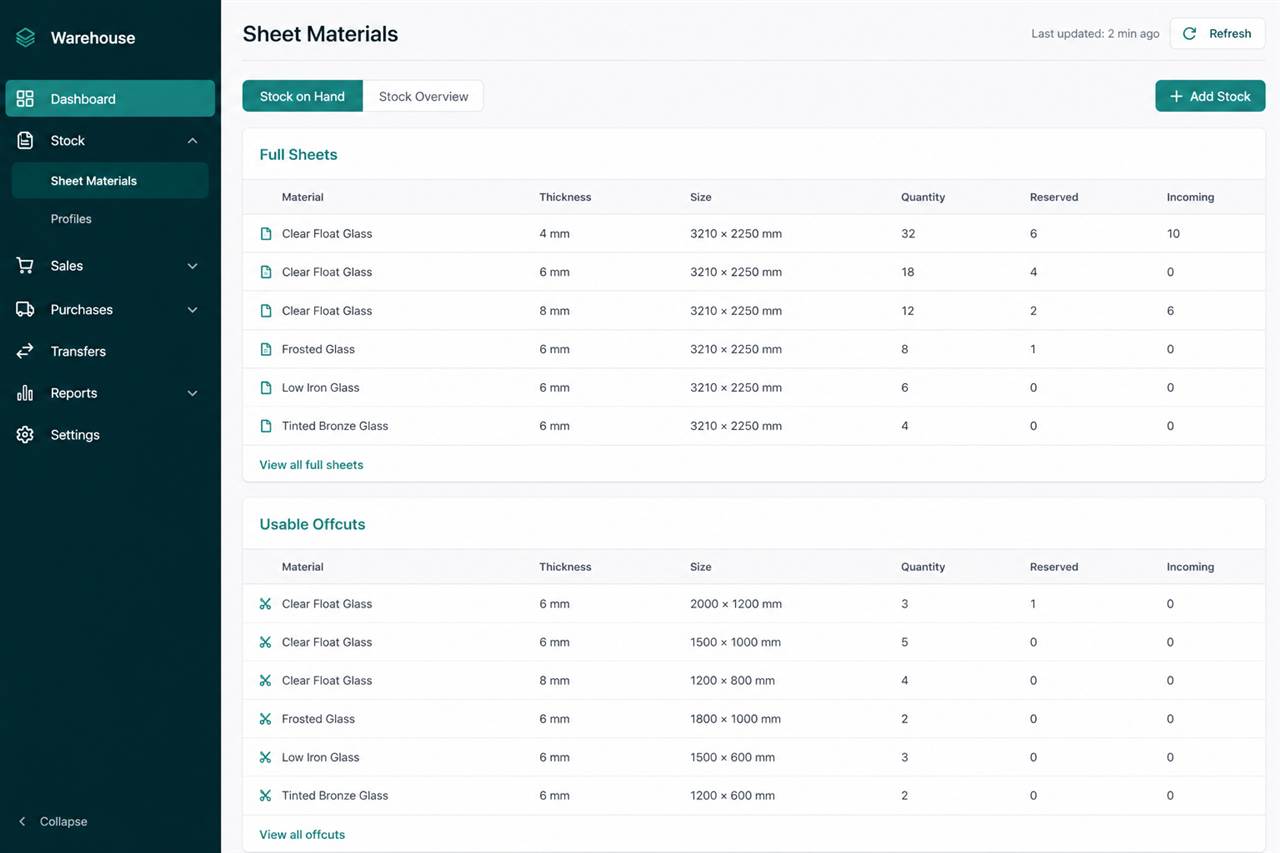
Breakage and small scrap often hide missing offcut stock.
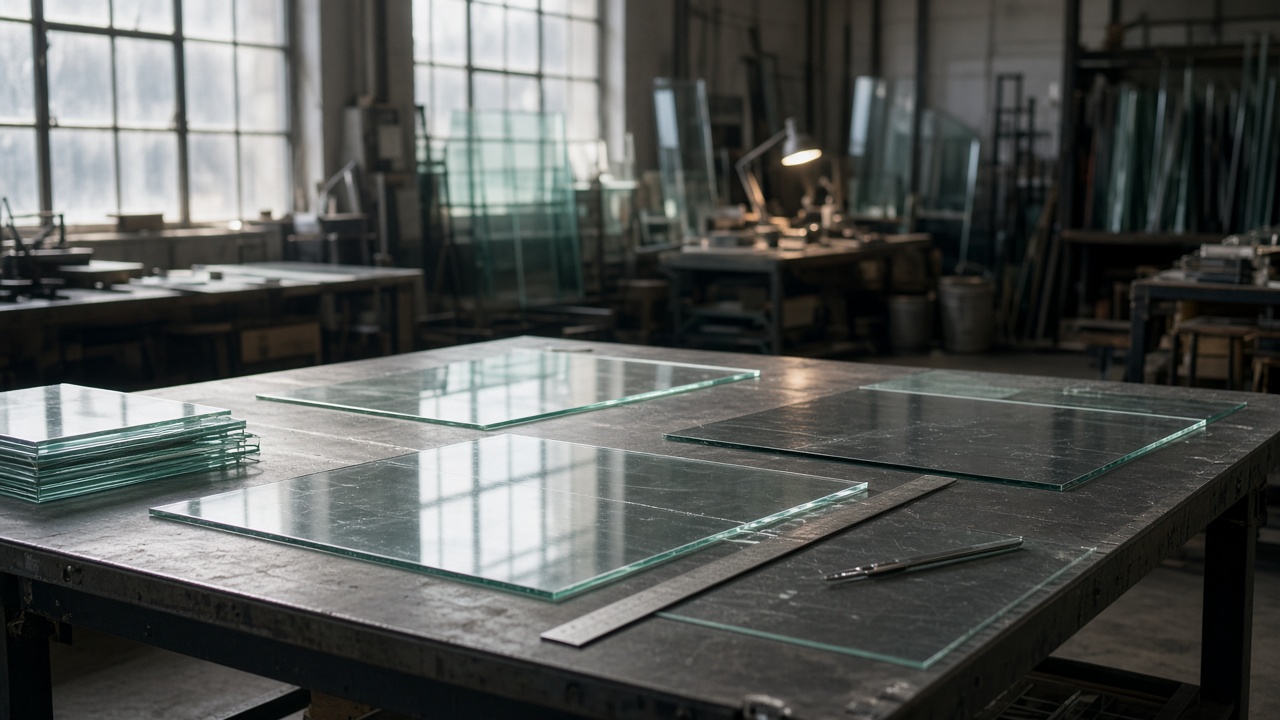
Glass waste does not drop because of "cut more carefully." It drops when every piece has an owner: size, thickness, QR, and the order it is reserved for. Otherwise the master opens a new sheet "just in case" and breakage gets buried in the overall percentage.
Three waste sources
First — a map without kerf and edge allowance: the part comes out smaller than the drawing and is discarded. Second — edge and drill chips: good material goes to the bin untracked. Third — "invisible" offcuts: they exist physically but not in inventory.
Cut all three. Savings from nesting density alone quickly hit a ceiling at breakage.
Minimum usable offcut
Agree what still counts as material. Example: side not shorter than 200 mm, area at least 0.08 m², same glass type. Smaller is scrap and not offered in cutting. Otherwise the system suggests dust and the master stops trusting stock.
The rule belongs in software, not on a sticker at the machine. Shift changes should not change sheet economics.
Breakage is a separate operation
If tempered glass cracked at a hole, that is not the same waste as cutting offcuts. Record the cause: drilling, edge work, transport, supplier defect. Otherwise you "optimize cutting" while losing on drilling and packing.
Practice:
- photo and size of breakage in the order card;
- write-off with reason;
- supplier claim if thickness or batch is wrong.
Offcut stock pays off on expensive sheets
On cheap raw 4 mm the effect is modest. On laminated, clear, and mirror glass one saved piece covers a month of care. List Master reserves offcuts for orders and keeps them from vanishing in a shop corner. Start by tracking what is already on the wall — faster than buying a "smarter" algorithm.