
Sheet metal nesting: how cutting software differs from CAM
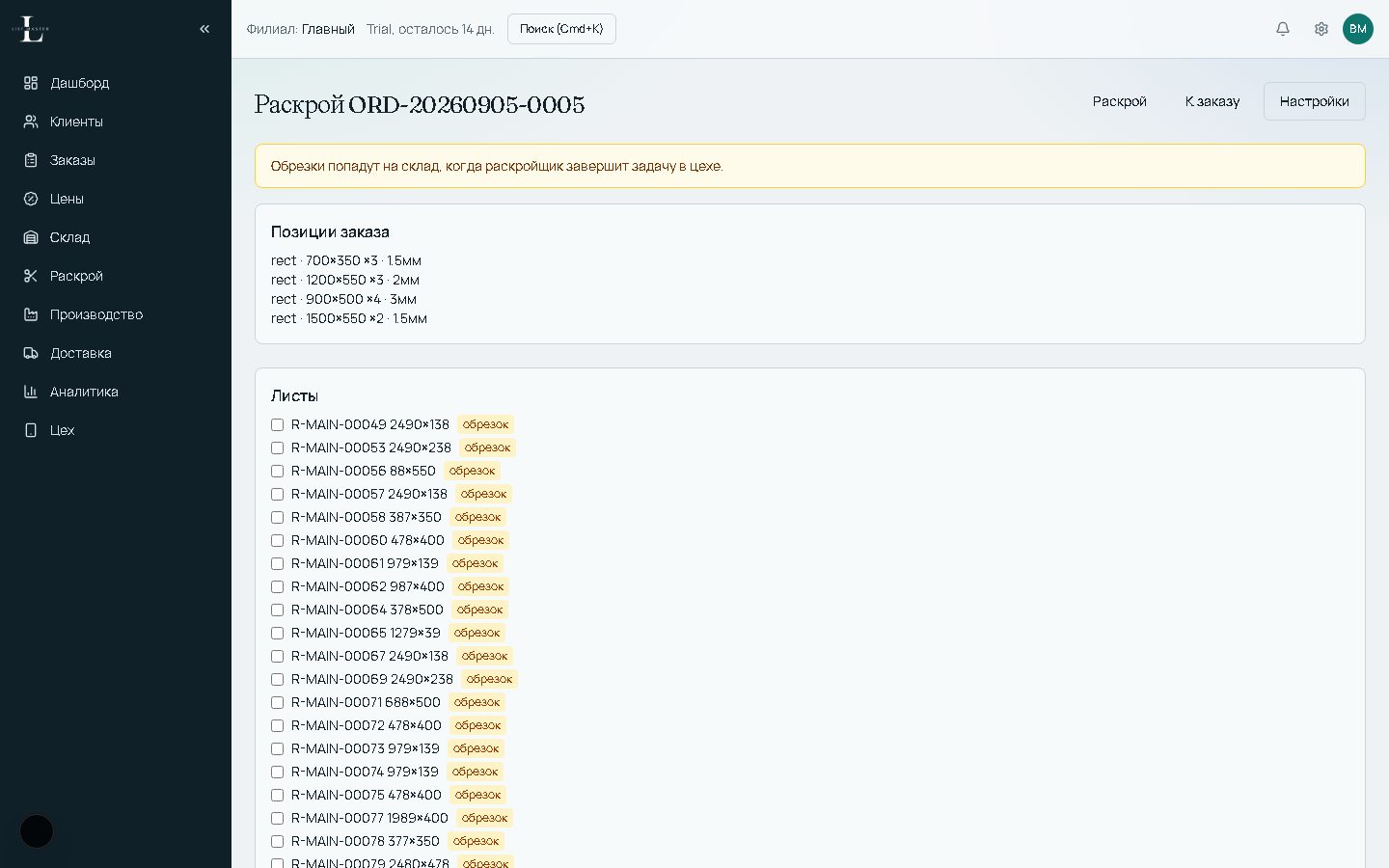
CAM cuts. List Master handles money, stock, and queue.
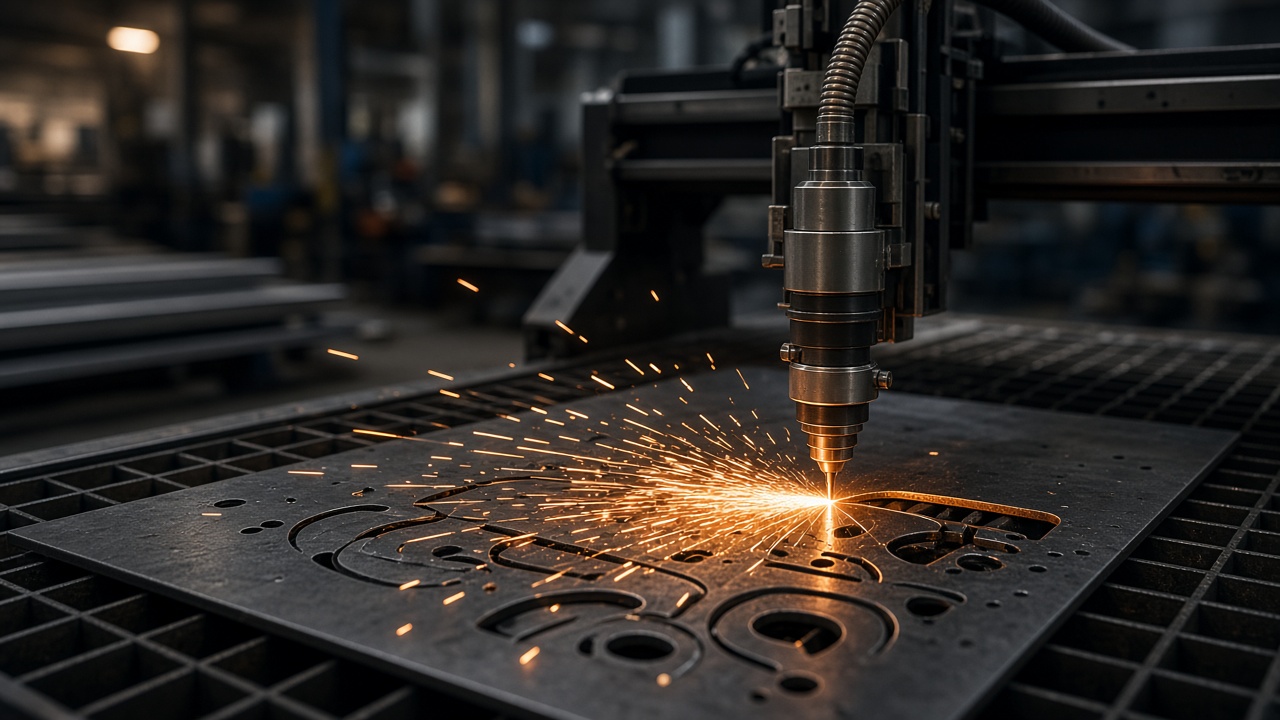
CAM nesting serves the machine: toolpath, true-shape, micro-joints, gas, power. The shop also needs a paid order, sheet remnant, roll direction, and who picks up the finished part. Mixing these layers is the classic "one program for everything" mistake.
What CAM does better
Complex contours, chamfers, common-line cutting, pierce optimization. List Master does not replace that and should not. If you laser-cut shaped parts, the postprocessor stays in CAM. Rectangular and guillotine cutting, sales, and stock are a different layer.
Where CAM is silent
CAM does not invoice the customer. It does not know the sheet was already paid as an offcut from a prior order. It does not count deburring and bending as quote lines. It does not print QR on parts for pickup. The manager opens Excel again.
Kerf is often forgotten in sales: the client sees clean size, the machine eats 0.3–1 mm, parts do not fit. Kerf must be in the map the manager approves, not only in technology.
Roll direction and burrs
Bending after cutting needs orientation. "Maximum on sheet" nesting without roll rules causes cracks. Deburring and painting are separate order services or "cutting price" does not cover the shop.
Connect without double entry
Orders and stock live in List Master. Rectangular cutting maps are approved there too. Shaped programs stay in CAM by order number. Sheet remnant after rectangular cutting returns to stock with dimensions, not a pile at the machine. Metal stops getting lost between departments without trying to replace CAM with "another ERP."