
Stone and slab cutting: veins, weight, and chips
Utilization on stone lies if you ignore slab pattern.
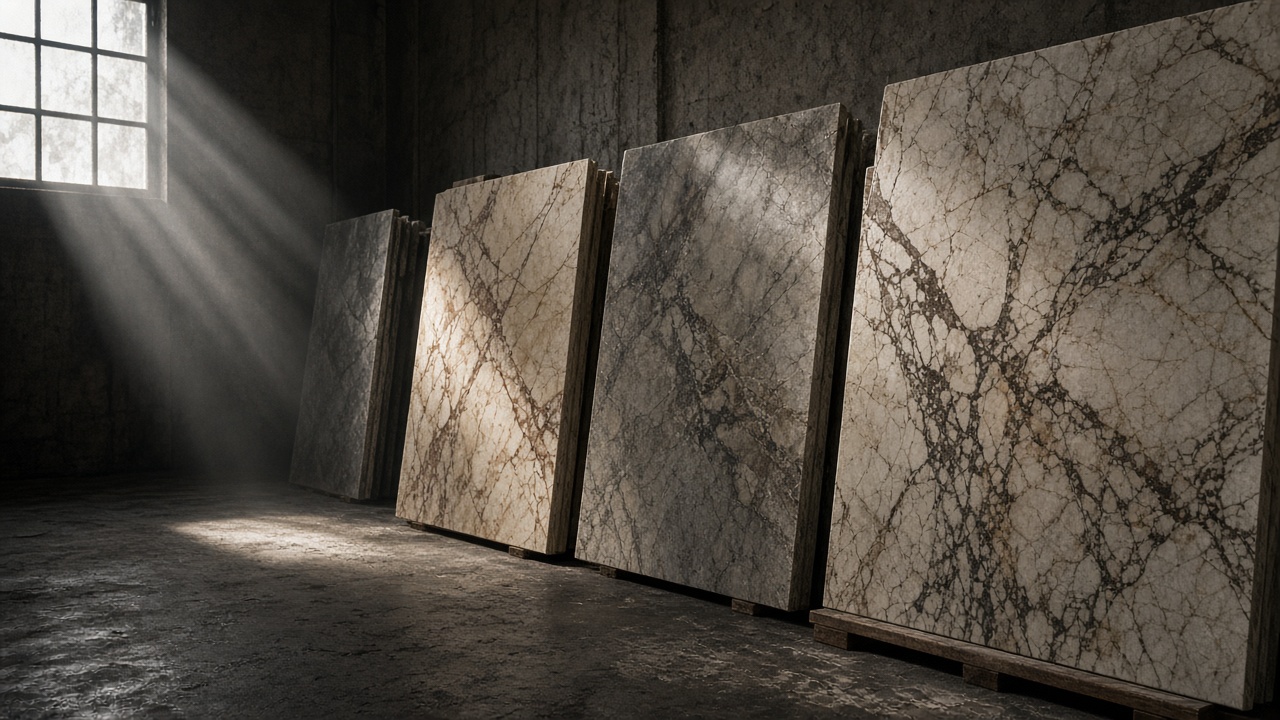
Stone and large-format porcelain do not forgive "like MDF, just pricier." Each slab is unique: vein, tone, quarry defect. Rotating "for density" breaks a two-piece countertop. Weight makes every extra lift a cost, not a logistics detail.
Piece-by-piece tracking
Each slab is a unit with actual size, thickness, photo or vein note. "Three Calacatta slabs in stock" is not enough. After a sink cutout the remainder must become a new unit, not vanish.
Pattern matching before the cut
The client chooses a piece, not area. A cutting map not tied to a specific slab is a sketch. Two-part vein match is checked before cutting. If software cannot ban rotation, the master marks the floor — and you are off the books again.
Porcelain chips
Large format cracks on inner corners and outlet cuts. Bake technological risk into the service, do not hide it in waste. A chip usable in a backsplash is an offcut. Dust is scrap with a reason.
Weight and queue
Slab moves are planned. A shop task "cut" without "where to pull from" idles the crane. Bin location and "reserved for order" status save tons of pointless carrying. List Master keeps the piece in stock, counts cutouts and edging, and sends tasks via QR — no "remnants in the stoneworker's head" spreadsheet.