

Vein and pattern matching
A two-piece countertop must align on the vein. A "maximum parts per sheet" algorithm hurts here. You need cutting with rotation forbidden and piece-by-piece slabs.
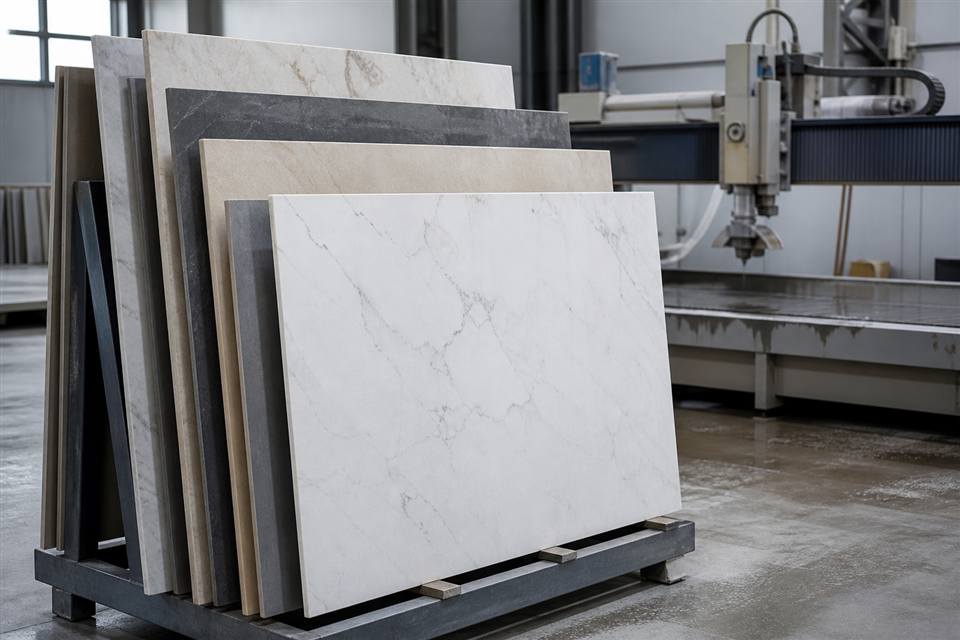
Stone and porcelain tile
Stone isn't mass panel cutting. A slab is expensive, the pattern can't be flipped like MDF, and a porcelain chip costs like a new order. List Master tracks each piece individually and won't suggest a rotation that breaks the vein.
Shop floor pains
A two-piece countertop must align on the vein. A "maximum parts per sheet" algorithm hurts here. You need cutting with rotation forbidden and piece-by-piece slabs.
Moving stone is a separate operation, not "grab from the shelf". The warehouse knows which slab is where so you don't haul a ton "just in case".
Large-format porcelain breaks on an outlet cutout. Without leftover tracking, the master cuts a new sheet and the fragment goes in the trash at material cost.
Piece-by-piece slab and porcelain tracking, cutting without unnecessary rotation, orders with cutouts and edge work, leftover warehouse.
Every stone is a warehouse unit with size, thickness, and photo note. The leftover after a countertop doesn't "disappear by the wall".
Sink cutouts and edge work in the same order. Rotation is forbidden by material rules, not "optimization for percentage".
Why a countertop takes more than an hour — slab selection included — is visible in the quote: material, cutouts, edge work, delivery.
Process
Plans for Stone. 14 days of full access, no card required.
Plans are temporarily unavailable.
Add one slab to the warehouse and build a countertop with a cutout — without the spreadsheet "leftovers in the master's head".